
Minesweeper vs Minedunit: what changes when the mines are evidence
If you know Minesweeper, you already know half of Minedunit. Here is what carries over, what is new, and why you never have to guess.
If you have ever played Minesweeper, the Minedunit board will feel familiar within seconds: covered tiles, numbers that count what is hidden around them, and logic that tells you where it is safe to step. But Minedunit turns that board into a crime scene, and a few changes make it a different kind of puzzle.
What carries over from Minesweeper
- The numbers mean the same thing. Each number counts the hidden items in the 8 tiles around it, diagonals included. In Minesweeper those are mines; in Minedunit they are pieces of evidence.
- The core logic is the same. A number that is already full makes its other neighbours safe. A number with no room left makes all its covered neighbours hidden items. Comparing neighbouring numbers settles tiles neither can settle alone.
- Blank tiles open their neighbours. Open a tile with no evidence around it and the empty area opens by itself.
What is different
Evidence is something you want to find
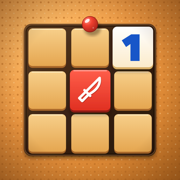
In Minesweeper you avoid the mines. In Minedunit you EXAMINE the evidence: a knife, footprints or blood. You pick the tool before each tap, OPEN for safe floor and EXAMINE for evidence, and using the wrong one costs a flashlight.
Three flashlights instead of one life
A wrong tap in Minesweeper ends the game. In Minedunit you have three flashlights, so one slip does not end the case. Lose all three and the killer escapes.
You never have to guess
Classic Minesweeper boards can force a guess. Every Minedunit case is built so that logic alone always reaches the answer, and each case starts with the body's tile already open, so you never take a blind first step.
The board is only half the puzzle
Minedunit adds suspects. Each one you uncover makes a statement about the board, and some of them lie. Easy cases have only one liar, the killer. Medium cases have exactly two liars. Hard cases can have up to three. You win by naming the killer, not by clearing the board, so you often accuse with tiles still covered.
Everyone gets the same case
Minedunit is a daily puzzle. Everyone plays the same three cases each day, so you can compare results with friends. The shared result shows your taps, time and stars, and a row of squares for your moves, without spoiling where anything was.
Which one is for you?
If you love the pure logic of Minesweeper, Minedunit keeps it and removes the coin flips. If you like whodunnits, it adds a reason to read the board: every number is a clue, and every suspect has a story that may or may not be true.
Frequently asked questions
Is Minedunit just Minesweeper?
No. The board uses the same counting logic as Minesweeper, but you also choose a tool for each tap, read suspects' statements, work out who is lying and accuse the killer.
Is Minedunit harder than Minesweeper?
It depends on the level. Easy cases are small boards with one liar and suit beginners. Hard cases have bigger boards and more liars, and can take longer than a typical Minesweeper game.
Do Minesweeper strategies work in Minedunit?
Yes. Full numbers, no room left and comparing neighbouring numbers all work the same way. You still need to check the suspects' statements to finish a case.